
Don’t Risk It — Get your report now and buy your next car with confidence.
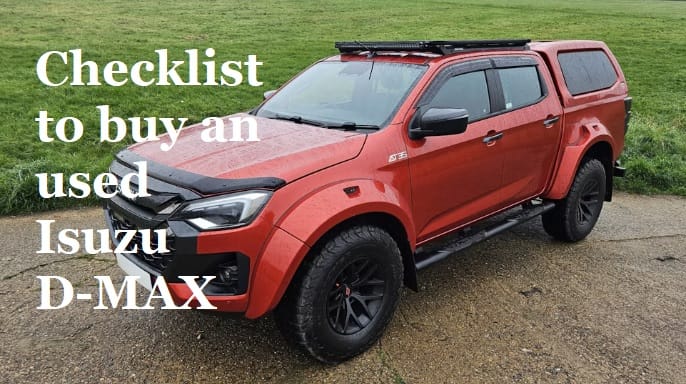
The Isuzu D-MAX is a popular ute in Australia, known for its practical design, diesel engine and ability to handle work and outdoor trips. It is a common choice for tradies, businesses, families and people who enjoy four-wheel driving. The latest-generation D-MAX arrived in Australia in 2020 and received a five-star ANCAP safety rating. The updated rating applies to vehicles built from July 2022, except the BLADE variant [1]. So, what makes the Isuzu D-MAX a popular used vehicle, and what should you check before you buy one?
What are the benefits of buying a used Isuzu D-MAX?
Save money: Buying a used Isuzu D-MAX can help you avoid some of the depreciation that comes with buying a new ute. You may also be able to buy a higher-spec model for less money than a new one. However, compare prices and check the vehicle’s condition before making a decision.
Built for work: The D-MAX is designed for people who need a practical ute. Depending on the model, it can carry tools, building materials and other equipment. It is a useful choice for tradies and businesses that need a vehicle for daily work.
Towing ability: Selected D-MAX models can tow up to 3,500kg when properly equipped [2]. This makes the ute useful for towing trailers, caravans and work equipment. Always check the towing capacity and payload of the exact vehicle, especially if you plan to carry heavy loads while towing.
Off-road driving: Four-wheel-drive D-MAX models can be suitable for rural roads, camping trips and many off-road conditions. Some versions have extra features to help with challenging terrain. Check the model’s equipment and make sure the four-wheel-drive system works correctly before buying.
Comfort and safety: The D-MAX offers a practical cabin, modern technology and a range of driver-assistance features. Depending on the model and year, these may include autonomous emergency braking, lane support and other safety systems [1]. Check the exact vehicle to see which features are fitted.
Choice of models: The D-MAX is available in different grades, including SX, LS-M, LS-U and X-TERRAIN, depending on the model year. Buyers can also choose between different cab styles, 4×2 and 4×4 drivetrains, and different load-area options.
What should I look for when buying an Isuzu D-MAX?
A vehicle history report will give you important information about the Isuzu D-MAX you are interested in.
In general, look for a used D-MAX with a good service history, reasonable kilometres and a condition that matches its age. Ask the seller how the vehicle has been used and whether it has had any major repairs.
A D-MAX used mainly for family trips may have had an easier life than one used every day on a construction site, for heavy towing or on rough off-road tracks.
When purchasing a used Isuzu D-MAX, pay close attention to the following areas.
Engine
Start the engine when it is cold and listen for unusual noises. Check that it starts easily and runs smoothly.
Look under the bonnet for signs of oil or coolant leaks. Also check for excessive exhaust smoke, warning lights or unusual engine noises.
Ask the seller when the vehicle was last serviced and request the service records. Regular maintenance is important, particularly for diesel vehicles that have been used for heavy work or towing.
Diesel particulate filter (DPF)
Many modern diesel D-MAX models are fitted with a diesel particulate filter (DPF), which helps reduce harmful emissions.
Check for DPF warning lights and ask whether the vehicle has had any problems with the filter. Vehicles that mainly travel short distances may not always complete the normal filter regeneration process.
Look for warning messages, reduced engine power or signs of repeated DPF repairs. If you have any concerns, have the vehicle checked by a qualified diesel mechanic before buying.
Transmission
During your test drive, check that the transmission operates smoothly.
Depending on the model, the D-MAX may have a manual or automatic transmission. Look for delayed gear changes, shuddering, slipping or unusual noises.
If the vehicle has been used for heavy towing, ask the seller about its towing history and check for signs of transmission wear.
Turbocharger and exhaust
The diesel engine uses a turbocharger to help deliver power. Listen for unusual whistling noises and check for excessive smoke when accelerating.
A small amount of noise can be normal, but unusual sounds, poor performance or heavy smoke may indicate a problem.
Also check for warning lights and signs of exhaust leaks. A qualified mechanic can help identify problems that may not be obvious during a short test drive.
Four-wheel-drive system
If you are buying a 4WD D-MAX, check that the four-wheel-drive system operates correctly.
Ask the seller whether the ute has regularly been driven off-road. Inspect the underbody for dents, scratches, fluid leaks and signs of heavy use.
Check the available driving modes according to the owner’s manual. If you are unsure how to test the system safely, have a mechanic inspect it [5].
Suspension and steering
The suspension can experience extra wear if the D-MAX has carried heavy loads or travelled on rough roads.
During your test drive, listen for knocking sounds and check for excessive bouncing, steering vibration or pulling to one side.
Inspect the shock absorbers, springs, steering components and suspension bushes for signs of damage or wear. Pay particular attention to the rear springs if the ute has regularly carried heavy loads.
Clutch
If you are buying a manual D-MAX, pay attention to how the clutch feels during your test drive.
Look for clutch slipping, shuddering, unusual noises or difficulty changing gears. A worn clutch can be expensive to replace, especially if the vehicle has regularly carried heavy loads or towed trailers.
If you notice any problems, arrange an inspection before making a decision [6].
Tyres and wheels
Check all four tyres for uneven wear, damage and sufficient tread.
Uneven tyre wear can point to wheel alignment or suspension problems. Inspect the wheels for dents and damage, particularly if the D-MAX has been driven on rough roads.
If the vehicle has larger aftermarket tyres or a suspension lift, check that the modifications are suitable and comply with applicable road rules.
Tub, tray and towing equipment
The D-MAX is often used as a work vehicle, so inspect the load area carefully.
Look for:
- Dents and scratches in the tub or tray
- Damage to the tailgate
- Signs of heavy loads
- Rust or damage around mounting points
- Towbar damage
- Trailer wiring problems
- Canopy or tool-box installation
- Aftermarket accessories
Ask the seller whether the vehicle has regularly towed heavy trailers or carried loads close to its maximum limits.
Remember that passengers, accessories and cargo all count towards the vehicle’s payload. Extra equipment can reduce the amount of weight you can legally carry.
Check the Isuzu D-MAX’s history
A used D-MAX may have had a hard working life, even if it looks clean and tidy.
Check the vehicle history before buying and look for signs of previous accidents, repairs, written-off status or stolen status. Also compare the odometer reading with the service records and other available information.
If the vehicle has low kilometres but shows heavy wear on the pedals, steering wheel, seats or tray, ask the seller for an explanation.
It is also worth checking whether the ute has been used commercially, modified for off-road driving or fitted with a replacement engine or transmission.
Isuzu D-MAX recalls in Australia
Some Isuzu D-MAX vehicles have been subject to safety recalls in Australia. The affected vehicles and required repairs depend on the model, build date and vehicle identification number (VIN).
Before buying, check the VIN through the official Australian vehicle recall website and ask Isuzu whether any outstanding recall work applies to the vehicle [3].
Ask the seller for proof that required recall repairs have been completed. Do not assume that a vehicle is free from recalls simply because it has been serviced regularly.
Check the warranty
A used Isuzu D-MAX may still have some of its original factory warranty remaining.
Isuzu UTE Australia lists a six-year or 150,000km comprehensive warranty for vehicles with a warranty start date on or after 1 January 2019, whichever comes first, subject to the applicable conditions [4].
Eligible vehicles may also receive up to seven years of roadside assistance when the required servicing is completed through a participating Isuzu UTE dealer [4].
Ask the seller for the original delivery date and service records. Confirm the remaining warranty with Isuzu rather than assuming every vehicle has the same coverage.
What else should I check before buying a used Isuzu D-MAX?
Before handing over your money, check:
- VIN and registration
- Odometer reading
- Service history
- Finance owing
- Written-off status
- Stolen status
- Accident history
- Engine and transmission
- DPF condition, if fitted
- Turbocharger and exhaust
- Four-wheel-drive system, if fitted
- Clutch, if manual
- Suspension and steering
- Tyres and brakes
- Lights and air conditioning
- Tub, tray and tailgate
- Towbar and trailer wiring
- Aftermarket modifications
- Recall status
- Remaining warranty
- Number of keys supplied
It is also a good idea to have the D-MAX inspected by a qualified mechanic before you buy it.
How can I check the history of a used Isuzu D-MAX?
Buying a used Isuzu D-MAX is not just about checking the engine, tyres and load area. A physical inspection can identify some mechanical problems, but it cannot tell you everything about the vehicle’s past.
A vehicle history report can help identify important information, including whether the vehicle has been reported as written off or stolen, whether finance is owing and whether its recorded history matches the seller’s claims.
A PPSR search, formly know as REVS check, is particularly important when buying a used vehicle in Australia. It can help identify whether a security interest has been registered against the vehicle.
Before you buy, check the D-MAX’s history, take it for a test drive and arrange an independent inspection if needed.
Do your checks before you buy. Knowing the Isuzu D-MAX’s history and condition can help you avoid unexpected costs and give you greater peace of mind.
Related article: Pre-purchase checklist to buy an used Toyota Hilux
References
1. ANCAP, Isuzu D-MAX Safety Rating. The five-star rating applies to D-MAX variants built from July 2022 onwards, excluding the BLADE variant. Read the ANCAP safety report
2. Isuzu UTE Australia, D-MAX Towing Capacity. Towing capacity varies by engine and variant; some models offer up to 3,500kg braked towing capacity. View D-MAX towing information
3. Australian Government, Vehicle Recalls. Search for vehicle safety recalls using the make, model and other available details. Check vehicle recalls
4. Isuzu UTE Australia, Warranty. Details of the six-year/150,000km new-vehicle warranty and roadside assistance conditions. Read Isuzu warranty information
5. Isuzu UTE Australia, D-MAX Specifications. Official specifications for engines, drivetrains, payload, towing and equipment. View D-MAX specifications
6. carsales, Buying a Used Isuzu D-MAX (2012–2020). Used-car inspection advice covering engine smoke, suspension, DPF-related concerns, modifications and towing. Read the used D-MAX guide